Showing posts with label Hope for Tomorrow. Show all posts

Friday, January 5, 2018

Tomo Donation Updates: Sokoage and Penguins Art

Happy 2018!

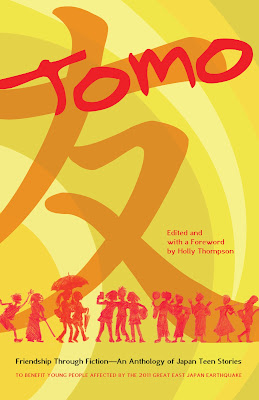
Six years ago, in 2012, the Tomo: Friendship Through Fiction anthology was going to press. In a period of just ten months from the March 11, 2011, Great East Japan Earthquake and Tsunami, I had proposed the anthology, Stone Bridge Press had agreed to publish, and I'd selected, compiled and edited the 36 stories, plus conducted interviews with most of the author illustrator and translator contributors. The aim of the Tomo anthology was to raise awareness outside of Japan about the need for longterm support for coastal communities in the Tohoku region by sharing Japan-related fiction for teens, and, most critically, to provide funding to NPOs serving teens in the hardest hit communities of Tohoku.


Until 2017, Tomo proceeds went to the NPO Hope for Tomorrow Japan, which in addition to providing educational expenses (including university entrance exam fees, travel costs to exam centers, etc.) also provided mentoring, tutoring, and foreign language support to high school students in hard-hit areas of Tohoku. But in 2017, the NPO Hope for Tomorrow closed its doors after its planned five years of supporting teen education in Tohoku.

Now, although Tomo is no longer available in print, the Kindle edition is still available for purchase, and sales of Tomo still generate small sums of money for donations. Recently, additional funds were generated through adoption of Tomo material via the international Copyright Clearance Center for educational purposes.

So in 2017, I set out to find other NPOs to receive Tomo donations.

In late October, I drove north to Tohoku to visit the cities of Ishinomaki and Kesennuma in coastal Miyagi Prefecture, and Rikuzentakata in Iwate Prefecture. My aim was to revisit some of the areas severely ravaged by the March 11, 2011 Great Eastern Japan Earthquake and Tsunami. Such a trip is haunting, moving and painful, yet at the same time, energizing and inspiring. Signs of loss and devastation are evident in the violently scarred coast, in elevation markers for inundation levels even high in the hills, in remaining ruined structures and temporary housing, and in the massive seawalls and ambitious city reconstruction projects underway. The reach of the monstrous tsunami left cruel before-and-after, have-and-have-not markers throughout communities up and down the jagged coast. People are left coping with unspeakable trauma. Yet there is evidence of brave determination among so many citizens to nurture their communities into wellness and vibrancy, to take actions toward healing, remembering, learning and growing.

Torï at Hiyoriyama Park in Ishinomaki
From Ishinomaki's Hiyoriyama Park: a fence shows the view before 3/11 photo, and the current scene
In Ishinomaki downtown streets, where in the spring of 2011 (see my Peace Boat blog posts) I'd shoveled tsunami muck out of surviving shops, businesses and homes, a lively downtown is now evidenced with new and revived stores, restaurants, and community initiatives. Practically across the street from a soba shop I'd helped muck out in 2011, is the new Penguins Art Kōbō, a studio where everyone is welcome to create, and there I joined a morning clay workshop.
Penguins Art clay workshop
In the Ibarazu neighborhood where I'd helped gather tons of rotting fish that had been strewn with wreckage far inland from the destroyed fish market, new parks and houses had sprouted. The pristine new Ishinomaki fish market (Ishinomaki uoichiba) nearby is now the largest in Japan and visitors are welcome. I ate an incredible sushi lunch at Fukizushi (富喜寿司) near Ishinomaki Station. I made new, dear friends in Ishinomaki, and I dined and stayed at the NPO-run Long Beach House not far from Ibarazu.

In Oginohama, where in 2011, I'd helped clean the Inari shrine grounds and assist with myriad tasks for a late summer festival, a new café sits opposite the sea below the torī leading to the steep set of stairs up to the hilltop shrine.

In Rikuzentakata, I paid a visit to the Miracle Pine.

Miracle Pine in Rikuzentakata
I watched the constant, mind-numbing parade of construction vehicles essentially reshaping the land into a new elevated city. I also spent time in the children's section of Rikuzentakata's beautiful new library in the Abasse Shopping Center high up on raised ground.

Rikuzentakata library
And in Kesennuma I visited the Rias Ark Museum of Art for its contemporary art and local history exhibits, as well as the exhibits relating to the 2011 earthquake and tsunami and tsunami history in Tohoku.

Photos from the Rias Ark Museum of Art website: http://rias-ark.sakura.ne.jp/2/
My Tohoku visit led to more questions, more explorations and more NPO discoveries.

And now, at the start of 2018, I'm proud to share with you two NPOs that I have selected to receive Tomo funds.

In December 2017, a donation of 100,000 JPY (about 900 USD) was made to the NPO Sokoage, based in Kesennuma City in Miyagi Prefecture.

Sokoage website photo: http://sokoage.org/
Sokoage (底上げ) meaning "raising up" engages high school students in community building and problem solving by encouraging students to take initiative to become thoughtful changemakers and by supporting their projects to create a vibrant new society. Projects have included the creation of a meeting and gathering space near the high school for students and Sokoage staff members; holding monthly community meal events with guest speakers; guiding students in getting to know their community, as well as creating materials to promote the region and record experiences of 3/11; providing volunteer academic support in temporary housing sites and elsewhere; encouraging students who have graduated from high school to stay involved in Kesennuma issues and events; holding supportive training camps for college students.

And in early January 2018, a donation of 30,000 JPY (about 270 USD) was made to the NPO Penguins Art Kōbō (ペンギンズアート工房), based in Ishinomaki, Miyagi Prefecture.

Penguins Art Kobo website: www.penginscafe.jp
Kazuko Miyakawa, Directory of Penguins Art Kobo
Penguins Art Kōbō is housed in an Ishinomaki downtown studio with a charming penguin logo on the shop shutter. Penguins Art aims to foster artistic expression in differently abled children, to create exhibition opportunities for them, and to enable group art experiences for all individuals in greater Ishinomaki. Established by former art teacher Kazuko Miyakawa, Penguins Art Kobo is a warm, supportive and welcoming oasis for everyone to explore creative expression.

I hope you'll visit the websites of these NPOs now receiving Tomo support.

Thank you to all of the Tomo contributors and friends, wherever you may be. May the Tomo anthology continue to create friendships through fiction as together we strive to support teens in Tohoku, Japan.
               
                                                                   Tomo Anthology Editor Holly Thompson


Friday, March 11, 2016

5 Years After 3/11

Today is the fifth anniversary of the Great East Japan Earthquake (東日本大震災 Higashi nihon daishinsai ) on March 11, 2011.
Buddhist Lantern Ceremony, Kōmyōji, Kamakura
 March 10, 2016
Tomo: Friendship Through Fiction--An Anthology of Japan Teen Stories (Stone Bridge Press) continues to raise money by donating royalties from sales of the book.

The donations from Tomo: Friendship Through Fiction support high school students in the earthquake and tsunami affected areas via the N.P.O Hope for Tomorrow. In December, Hope for Tomorrow announced the most recent allocation of funds as follows:
The 2015 Educational Support Program will be allocated to the following five high schools:Haramachi High School (Minami Soma City, Fukushima Prefecture), Ishinomaki High School (Ishinomaki City, Miyagi Prefecture), Kesennuma High School (Kesennuma City, Miyagi Prefecture), Ofunato High School (Ofunato City, Iwate Prefecture) Takata Senior High School (Rikuzentakada City, Iwate Prefecture; temporarily located in Ofunato City).
Individual recipients are selected through their schools, and grants are awarded to students each February.

Five years have passed since the earthquake--both quickly and slowly. Recovery proceeds in Tohoku, but problems abound, and of course, after trauma of such magnitude, grief and pain are ongoing. In Japan, it is customary to keep true feelings to yourself, to mute your complaints, to suffer in silence. After the tsunami, a homeowner in the town of Otsuchi in Iwachi Prefecture wisely set up a telephone booth in his garden, placed a disconnected rotary dial phone inside, and invited people to step inside and speak to the loved ones they'd lost in the disaster. Called the kaze no denwa (風の電話) -- wind phone -- the booth has drawn over 10,000 visitors (see a reblogged version of a Mainichi Daily article here and NHK coverage in Japanese here). NHK recently featured a poignant documentary (trailer) on the phone and its power to enable individuals to speak words of deep pain. One segment featured a family of a mother and her three children who'd lost their father with all of them visiting the wind phone after the eldest child bravely did so.

Yoko Imoto has written and illustrated a children's picture book called Kaze no denwa (The Wind Telephone).  This book and one other are featured on the SCBWI Japan Translation Group Blog: Two Stories for Children Commemorate 3.11 in a post by Deborah Iwabuchi (translator of the Tomo story "The Law of Gravity" by Yuko Katakawa) with links to English-language readings.

For readers of all ages, today is a also good day to re-read the SCBWI Japan Translation Group post by Sako Ikegami (translator of the Tomo story "Hachiro" by Ryusuke Saito): The Tale of Hamaguchi Gohei and the Tsunami.  Kimiko Kajikawa's picture book Tsunami, written before 3/11, is based on the same tale.


Wishing compassion and the comfort of words and stories to all those affected by the disasters of March 11, 2011.

Saturday, June 6, 2015

Tomo Still Giving

All proceeeds from sales of the book Tomo: Friendship Through Fiction--An Anthology of Japan Teen Stories are donated to support teens in the 3/11 tsunami- and earthquake-affected areas of Tohoku. 

Recently another 20,000 yen was donated to the Japanese NPO Hope for Tomorrow, which is providing educational support grants to high school students in the three hardest hit prefectures of Fukushima, Miyagi, and Iwate. 

source: Wikimedia commons

In 2014, educational support grants went to 127 students in the following schools:
  • Fukushima Prefectural Haramachi High School (Minami Soma City)
  • Miyagi-ken Ishinomaki High School (Ishinomaki City)
  • Miyagi-ken Kesennuma High School (Kesennuma City)
  • Iwate Prefectural Ofunato High School (Ofunato City)
  • Iwate Prefectural Takata Senior High School (Rikuzentakata City; temporarily located in Ofunato City)

Thank you to our publisher, Stone Bridge Press, and to everyone who continues to purchase copies of Tomo either in print or as an ebook. Your purchase does make a difference to teens in Tohoku. 

We hope that the stories in Tomo offer windows and mirrors to our many readers. 

Wednesday, March 11, 2015

In the Wake of 3/11

Today, March 11, 2015, marks the four-year anniversary of 3/11, the date of the massive earthquake and tsunami that caused tremendous devastation in northern Japan, particularly in Tohoku. There is still much struggle and hardship in the region, and Tomo has continued to support teens in Tohoku through the NPO Hope for Tomorrow


Ishinomaki, May 4, 2011 (photo by Holly Thompson)

Have you read the 36 stories in the Tomo: Friendship Through Fiction anthology? On this Tomo Anthology blog is an extensive Readers' Guide to the anthology, as well as many, in-depth interviews featuring author and translator contributors.

Below are some articles that may be of interest on this fourth anniversary, two of them by Louise George Kittaka, a Tomo anthology contributing author:


And below is a free webinar to be held on April 15 by the National Consortium for Teaching about Asia featuring works in two concurrent exhibits at the Museum of Fine Arts Boston: 

The Great Wave of Hokusai and the Great Wave of 3/11: Japanese Artists' Responses to Nature

Wishing all in Tohoku love and wellness--from the Tomo Anthology community of authors, translators, illustrators and the generous publisher Peter Goodman of Stone Bridge Press

Wednesday, February 18, 2015

Artistic and Activist Responses to 3/11

Soon the four-year anniversary of the March 11, 2011 Great Eastern Japan Tsunami and Earthquake will be upon us. Sales of Tomo: Friendship Through Fiction--An Anthology of Japan Teen Stories published by Stone Bridge Press continue to support teens in the tsunami and quake affected areas--teens impacted by the Tohoku Triple Disaster--via the NPO Hope for Tomorrow.

The Tomo: Friendship Through Fiction Reader's Guide continues to provide guidance for book groups, teachers and students, and is supported by the many in-depth contributor interviews featured on this blog.

This month Asia-Pacific Journal (Vol. 13, Issue 6) focuses on artistic and activist responses to the 3/11 disaster.

Alexander Brown and Vera Mackie, "Introduction: Art and Activism in Post-Disaster Japan", The Asia-Pacific Journal, Vol. 13, Issue 6, No. 1, February 16, 2015

The introduction by Alexander Brown and Vera Mackie contains a footnote with recommended reading that includes Tomo: Friendship Through Fiction and serves as an excellent reading list:

In addition to the extensive coverage in The Asia-Pacific Journal: Japan Focus, see, inter alia, Jeff Kingston, ed., Tsunami: Japan’s Post-Fukushima Future, Foreign Policy Magazine, Washington D.C., 2011; Jeff Kingston, ed., Natural Disaster and Nuclear Crisis in Japan: Response and Recovery after Japan’s 3/11, Routledge, Oxford, 2012; Holly Thompson, ed., Tomo: Friendship through Fiction: An Anthology of Japan Teen Stories, Stone Bridge Press, Berkeley; David Karashima and Elmer Luke, eds, March was Made of Yarn: Reflections on Japan’s Earthquake, Tsunami and Nuclear Meltdown, Vintage, New York, 2012; Lucy Birmingham and David McNeill, eds, Strong in the Rain: Surviving Japan’s Earthquake, Tsunami and Fukushima Nuclear Disaster, Palgrave Macmillan, London, 2012; Mark Willacy, Fukushima: Japan’s Tsunami and the Inside Story of the Nuclear Meltdown, Pan Macmillan Australia, Sydney, 2013; Hiroshima City University 3/11 Forum, Japan’s 3/11 Disaster as Seen From Hiroshima: A Multidisciplinary Approach, Sanseidō, Tokyo, 2013; Roy Starrs, ed., When the Tsunami Came to Shore: Culture and Disaster in Japan, Global Oriental, Leiden, 2014; and Japan Forum, Vol. 26, No 3, 2014.

In this Asia-Pacific Journal focus, there are eight articles in addition to the introductory piece, all tackling some aspect of artistic and activist response to the 3/11 disasters. The series makes for important reading regarding the profound effect of the tsunami, earthquake and nuclear disaster on the lives of people in Tohoku and throughout Japan. May we never forget. 

Wednesday, March 26, 2014

Three Years After, Tomo Keeps Giving

March 11, 2014 marked the three-year anniversary of the Great East Japan Earthquake and Tsunami.

Recently the 2013 earnings from sales of Tomo: Friendship Through Fiction plus the Stone Bridge Press publisher donation--a total of 50,000 yen--was transferred to the Japan-based NPO Hope for Tomorrow.


Hope for Tomorrow continues to provide meaningful much-needed support to teens in the quake and tsunami affected areas of Tohoku in northern Japan.

Your purchase of Tomo: Friendship Through Fiction--An Anthology of Japan Teen Stories really does make a difference to teens in Tohoku. Consider donating a copy of Tomo to your school or town library, suggesting it to book groups, and purchasing copies as gifts.

See Hope for Tomorrow's website to learn about this small NPO with a big heart and their commitment to longterm education-focused aid for young people in Tohoku.

Sunday, December 2, 2012

Giving through Tomo: Friendship Through Fiction--2012 Donation to Hope for Tomorrow

Tomo: Friendship Through Fiction--An Anthology of Japan Teen Stories is a benefit anthology of young adult fiction, and it is a pleasure to announce the first donation resulting from the sales of this collection of Japan-related stories. As explained in previous Tomo Blog posts (here and here) the first donations from the sales of Tomo: Friendship Through Fiction will go to Hope for Tomorrow (hope-tomorrow.jp), the Japan-based NPO that provides three methods of support (Educational Support Program, the International Exchange Support Program, and the Foreign Language Support Program) to high school students in areas of Tohoku hardest hit by the major tsunami and earthquake of 2011.

A donation of 100,000 yen (at the current exchange rate about 1,200 USD) was made today to Hope for Tomorrow. This money includes royalty earnings for the first half of 2012 (Tomo was published in March 2012) plus Stone Bridge Press publisher donations for that same period (rounded up with an additional 727 yen from the editor for a total of 75,000 yen), as well as editor's advance money (25,000 yen). Note that the editor's advance has otherwise only been used for printing Tomo publicity postcards, and a small amount has been set aside to enable more cards to be printed.

A huge thank you to all the Tomo authors and translators for donating their stories and their time. Also thanks to Peter Goodman at Stone Bridge Press for the generous publisher donations and for making this project possible. And thank you to Hope for Tomorrow, for providing much needed long-term support for teens in Tohoku.

Please continue to support this project--tell your friends about Tomo: Friendship Through Fiction. Tell teachers and librarians about the Tomo Reader's Guide, which is full of discussion questions and writing activities, and remind them about the extensive cache of author, illustrator and translator interviews on the Tomo Blog. And consider purchasing copies of Tomo: Friendship Through Fiction as holiday gifts--order through your local bookseller, your favorite online bookseller, or through Stone Bridge Press.


The teens in Tohoku need our long-term encouragement and support. 

Thursday, February 9, 2012

Hope for Tomorrow Site in English

In an earlier post, I explained that proceeds from the sales of the Tomo anthology will help support the Japan NPO Hope for Tomorrow.

At that time, this new NPO did not yet have English information on the website, but I'm happy to report that the site is now bilingual, with pages in both Japanese and English. Have a look at the Hope for Tomorrow website, and see what this NPO is doing to help teens in the earthquake and tsunami affected areas of Tohoku, Japan, keep up with their education.

Friday, January 27, 2012

Tomo Support for Japan NPO Hope for Tomorrow

I'm happy to announce that the Japan NPO Hope for Tomorrow will be the first recipient of funds raised through the sales of Tomo (publication date March 10, 2012). Recently I had the pleasure of meeting with Rieko Tanaka, who serves on the board of directors of this new NPO. We discussed Hope for Tomorrow's activities thus far and their goals for the future.

Hope for Tomorrow aims to fill in the gaps of government funding and to ensure that high school students in the affected areas can further their education. The Hope for Tomorrow program has three main areas of support: Educational Support, International Exchange Support, and Foreign Language Support. Hope for Tomorrow will provide funding for the costs of exam fees, transportation and accommodation associated with taking university entrance exams; enable meaningful intercultural exchange opportunities; and encourage and facilitate foreign language learning. Hope for Tomorrow has already provided funding for Tohoku students in the current winter 2012 round of university exams, and international exchanges have taken place via Internet between university students in the U.S. and select high schools in hard-hit areas of Tohoku. In March a group of high school students from the affected areas will travel to a school in New York for home-stay experiences. "Education is essential. And we really believe that ability in language and ability to communicate with people from other cultures is key to their futures. With people from around the world focusing on Tohoku recovery, and people from many countries coming to Tohoku to help, students in the affected areas need these skills more than ever," Tanaka explained.

Hope for Tomorrow endeavors to enable teens in the the earthquake and tsunami affected areas to hold onto their hopes and see a meaningful future full of opportunities.

Currently the Hope for Tomorrow website has only Japanese explanation, but English pages will be added soon!

Holly Thompson