Showing posts with label Translation. Show all posts

Friday, January 5, 2018

Tomo Donation Updates: Sokoage and Penguins Art

Happy 2018!

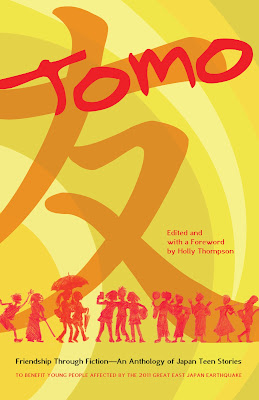
Six years ago, in 2012, the Tomo: Friendship Through Fiction anthology was going to press. In a period of just ten months from the March 11, 2011, Great East Japan Earthquake and Tsunami, I had proposed the anthology, Stone Bridge Press had agreed to publish, and I'd selected, compiled and edited the 36 stories, plus conducted interviews with most of the author illustrator and translator contributors. The aim of the Tomo anthology was to raise awareness outside of Japan about the need for longterm support for coastal communities in the Tohoku region by sharing Japan-related fiction for teens, and, most critically, to provide funding to NPOs serving teens in the hardest hit communities of Tohoku.


Until 2017, Tomo proceeds went to the NPO Hope for Tomorrow Japan, which in addition to providing educational expenses (including university entrance exam fees, travel costs to exam centers, etc.) also provided mentoring, tutoring, and foreign language support to high school students in hard-hit areas of Tohoku. But in 2017, the NPO Hope for Tomorrow closed its doors after its planned five years of supporting teen education in Tohoku.

Now, although Tomo is no longer available in print, the Kindle edition is still available for purchase, and sales of Tomo still generate small sums of money for donations. Recently, additional funds were generated through adoption of Tomo material via the international Copyright Clearance Center for educational purposes.

So in 2017, I set out to find other NPOs to receive Tomo donations.

In late October, I drove north to Tohoku to visit the cities of Ishinomaki and Kesennuma in coastal Miyagi Prefecture, and Rikuzentakata in Iwate Prefecture. My aim was to revisit some of the areas severely ravaged by the March 11, 2011 Great Eastern Japan Earthquake and Tsunami. Such a trip is haunting, moving and painful, yet at the same time, energizing and inspiring. Signs of loss and devastation are evident in the violently scarred coast, in elevation markers for inundation levels even high in the hills, in remaining ruined structures and temporary housing, and in the massive seawalls and ambitious city reconstruction projects underway. The reach of the monstrous tsunami left cruel before-and-after, have-and-have-not markers throughout communities up and down the jagged coast. People are left coping with unspeakable trauma. Yet there is evidence of brave determination among so many citizens to nurture their communities into wellness and vibrancy, to take actions toward healing, remembering, learning and growing.

Torï at Hiyoriyama Park in Ishinomaki
From Ishinomaki's Hiyoriyama Park: a fence shows the view before 3/11 photo, and the current scene
In Ishinomaki downtown streets, where in the spring of 2011 (see my Peace Boat blog posts) I'd shoveled tsunami muck out of surviving shops, businesses and homes, a lively downtown is now evidenced with new and revived stores, restaurants, and community initiatives. Practically across the street from a soba shop I'd helped muck out in 2011, is the new Penguins Art Kōbō, a studio where everyone is welcome to create, and there I joined a morning clay workshop.
Penguins Art clay workshop
In the Ibarazu neighborhood where I'd helped gather tons of rotting fish that had been strewn with wreckage far inland from the destroyed fish market, new parks and houses had sprouted. The pristine new Ishinomaki fish market (Ishinomaki uoichiba) nearby is now the largest in Japan and visitors are welcome. I ate an incredible sushi lunch at Fukizushi (富喜寿司) near Ishinomaki Station. I made new, dear friends in Ishinomaki, and I dined and stayed at the NPO-run Long Beach House not far from Ibarazu.

In Oginohama, where in 2011, I'd helped clean the Inari shrine grounds and assist with myriad tasks for a late summer festival, a new café sits opposite the sea below the torī leading to the steep set of stairs up to the hilltop shrine.

In Rikuzentakata, I paid a visit to the Miracle Pine.

Miracle Pine in Rikuzentakata
I watched the constant, mind-numbing parade of construction vehicles essentially reshaping the land into a new elevated city. I also spent time in the children's section of Rikuzentakata's beautiful new library in the Abasse Shopping Center high up on raised ground.

Rikuzentakata library
And in Kesennuma I visited the Rias Ark Museum of Art for its contemporary art and local history exhibits, as well as the exhibits relating to the 2011 earthquake and tsunami and tsunami history in Tohoku.

Photos from the Rias Ark Museum of Art website: http://rias-ark.sakura.ne.jp/2/
My Tohoku visit led to more questions, more explorations and more NPO discoveries.

And now, at the start of 2018, I'm proud to share with you two NPOs that I have selected to receive Tomo funds.

In December 2017, a donation of 100,000 JPY (about 900 USD) was made to the NPO Sokoage, based in Kesennuma City in Miyagi Prefecture.

Sokoage website photo: http://sokoage.org/
Sokoage (底上げ) meaning "raising up" engages high school students in community building and problem solving by encouraging students to take initiative to become thoughtful changemakers and by supporting their projects to create a vibrant new society. Projects have included the creation of a meeting and gathering space near the high school for students and Sokoage staff members; holding monthly community meal events with guest speakers; guiding students in getting to know their community, as well as creating materials to promote the region and record experiences of 3/11; providing volunteer academic support in temporary housing sites and elsewhere; encouraging students who have graduated from high school to stay involved in Kesennuma issues and events; holding supportive training camps for college students.

And in early January 2018, a donation of 30,000 JPY (about 270 USD) was made to the NPO Penguins Art Kōbō (ペンギンズアート工房), based in Ishinomaki, Miyagi Prefecture.

Penguins Art Kobo website: www.penginscafe.jp
Kazuko Miyakawa, Directory of Penguins Art Kobo
Penguins Art Kōbō is housed in an Ishinomaki downtown studio with a charming penguin logo on the shop shutter. Penguins Art aims to foster artistic expression in differently abled children, to create exhibition opportunities for them, and to enable group art experiences for all individuals in greater Ishinomaki. Established by former art teacher Kazuko Miyakawa, Penguins Art Kobo is a warm, supportive and welcoming oasis for everyone to explore creative expression.

I hope you'll visit the websites of these NPOs now receiving Tomo support.

Thank you to all of the Tomo contributors and friends, wherever you may be. May the Tomo anthology continue to create friendships through fiction as together we strive to support teens in Tohoku, Japan.
               
                                                                   Tomo Anthology Editor Holly Thompson


Monday, May 27, 2013

Talking Translation--TOMO in the AFCC Translation Seminars

The Asian Festival of Children's Content (AFCC) is a conference in Singapore with various tracks, workshops and seminars. This year, for the first time, a translation track was offered during the day of seminars, and the track of four seminars featured Tomo translator contributors Avery Fischer Udagawa and Alexander O. Smith, as well as editor Holly Thompson. In the individual talks and panel discussion, Tomo came up again and again--the nature of the project; the nitty-gritty aspects of translation; the search for and selection of stories; the correspondence between editor, translators and authors; the editing process, and publication and promotion.

Here is translator Avery Fischer Udagawa talking at AFCC about the Boston launch of Tomo, to which author Sachiko Kashiwaba and daughter wore kimono with the obi tied in the same way as depicted in the story.

Avery spoke of sharing these photos with students during school visits in Japan and Thailand, thereby making a local event travel the world.

The AFCC translation panel also featured Harvey Thomlinson, publisher from Hong Kong, and Mohd Khair Ngadiron, CEO Institut Terjemahan & Buku Malaysia. It was great to see the translation seminars well attended by authors, translators, publishers and editors from around Asia, all eager to see more stories from Asia translated into English.

AFCC Translation Panel
And it's been so nice to see Tomo: Friendship Through Fiction being snapped up by attendees at the conference. Here are a few excited fans of the book, which is still helping to provide longterm support for teens in Tohoku. Thank you!
Young writers Afi Noor and Hemizah from Malaysia and author Evelyn Wong of Singapore


Monday, October 8, 2012

The TOMO Reader's Guide--Now Available

Tomo: Friendship Through Fiction is a rich collection of 36 stories relating to Japan, ideal for classrooms, libraries and book groups. Now the Tomo Reader's Guide is available for download. 


To download the PDF of the Reader's Guide click here or visit the Reader's Guide section of this Tomo Blog. Included in the Reader's Guide are writing activities (creative writing, translation and academic writing) and discussion questions, both general and story by story, to accompany the Tomo anthology. 

Tomo: Friendship Through Fiction is a benefit anthology, with proceeds going to benefit teens in the Tohoku areas of Japan affected by the 2011 tsunami and earthquake.

Feel free to share feedback about the Reader's Guide, as it will be periodically improved and updated. Thank you!

Wednesday, August 15, 2012

Kenji Miyazawa’s Poem “Ame ni mo makezu”--Interview with TOMO Translators David Sulz and Hart Larrabee


David Sulz
David Sulz (translator of the Tomo epigraph “Be Not Defeated by the Rain” Ame ni mo makezu) is a librarian at the University of Alberta. He spent four years in the nineties on the JET program in Miyagi (Sendai and Towa-cho) and tries to return often to visit the kindred spirits there who remain among his closest friends. Other translations include Jiro Nitta’s Phantom Immigrants (Mikkosen suian maru), Kenji Miyazawa’s “The Poison Powder Police Chief,” and lyrics from songs performed by Miyagi friends.
Hart Larrabee
Hart Larrabee (translator of the Tomo story “Anton and Kiyohime”) was born in New York State and majored in Japanese at Carleton College in Minnesota. He also earned postgraduate degrees from the University of Pennsylvania and University of Hawaii. A full-time freelance translator, he currently lives with his family in Nagano Prefecture.

Both David Sulz and Hart Larrabee have translated the famous Kenji Miyazawa poem Ame ni mo makezu. An excerpt of Sulz’s translation appears in Tomo as the anthology’s epigraph.

Below is the original poem in Japanese, followed by the Sulz and Larrabee translations, which are fascinating for their differences. Following the poems, each translator discusses his approach to the poem and the resulting translation.

Here is how the original poem would have looked if written horizontally. Miyazawa used katakana instead of kanji and hiragana writing for much of the poem.

雨ニモマケズ 風ニモマケズ
雪ニモ夏ノ暑サニモマケヌ丈夫ナカラダヲモチ
欲ハナク 決シテ瞋ラズ イツモシズカニワラッテイル
一日ニ玄米四合ト 味噌ト少シノ野菜ヲタベ
アラユルコトヲ ジブンヲカンジョニ入レズニ
ヨクミキキシワカリ ソシテワスレズ
野原ノ松ノ林ノ蔭ノ 小サナ萱ブキノ小屋ニイテ
東ニ病気ノコドモアレバ 行ッテ看病シテヤリ
西ニツカレタ母アレバ 行ッテソノ稲ノ束ヲ負イ
南ニ死ニソナ人アレバ 行ッテコワガラナクテモイイトイイ
北ニケンカヤソショガアレバツマラナイカラヤメロトイイ
ヒデリノトキハナミダヲナガシ
サムサノナツハオロオロアルキ
ミンナニデクノボートヨバレ
ホメラレモセズ クニモサレズ
モノニ ワタシハナリタイ

This is how the poem was discovered written in Kenji Miyazawa’s notebook:

courtesy of the Daimaru Museum
Following is David Sulz’s translation of Kenji Miyazawa’s poem Ame ni mo makezu:

Be not defeated by the rain. Nor let the wind prove your better.
Succumb not to the snows of winter. Nor be bested by the heat of summer.

Be strong in body. Unfettered by desire. Not enticed to anger. Cultivate a quiet joy.
Count yourself last in everything. Put others before you.
Watch well and listen closely. Hold the learned lessons dear.

A thatch-roof house, in a meadow, nestled in a pine grove's shade.

A handful of rice, some miso, and a few vegetables to suffice for the day.

If, to the East, a child lies sick: Go forth and nurse him to health.
If, to the West, an old lady stands exhausted: Go forth, and relieve her of burden.
If, to the South, a man lies dying: Go forth with words of courage to dispel his fear.
If, to the North, an argument or fight ensues:
Go forth and beg them stop such a waste of effort and of spirit.

In times of drought, shed tears of sympathy.
In summers cold, walk in concern and empathy.

Stand aloof of the unknowing masses:
Better dismissed as useless than flattered as a "Great Man".

This is my goal, the person I strive to become.

Following is Hart’s Larrabee’s translation of Kenji Miyazawa’s poem Ame ni mo makezu :

Unbeaten by the rain
Unbeaten by the wind
Bested by neither snow nor summer heat
Strong of body
Free of desire
Never angry
Always smiling quietly
Dining daily on four cups of brown rice
Some miso and a few vegetables
Observing all things
With dispassion
But remembering well
Living in a small, thatched-roof house
In the meadow beneath a canopy of pines
Going east to nurse the sick child
Going west to bear sheaves of rice for the weary mother
Going south to tell the dying man there is no cause for fear
Going north to tell those who fight to put aside their trifles
Shedding tears in time of drought
Wandering at a loss during the cold summer
Called useless by all
Neither praised
Nor a bother
Such is the person
I wish to be

Translator Q & A

What inspired you to translate this poem?

David Sulz: I had a professor who once told us that after studying Chinese for four years at university, he had no idea what to do next. He sent $50 to a bookstore in Hong Kong and received many boxes of Chinese books. Overwhelmed, he chose the thinnest book and started translating it. Through various coincidental twist and turns, that serendipity led to his becoming a world expert on a particular Tang dynasty Chinese poet.

In general, anything I try to translate is a combination of serendipity and personal connections. For example, a historical novel based in places I lived and songs, nature art activities, and travel TV shows created by close friends with whom I could discuss the meaning. A good friend with whom I often had deep philosophical conversations happened to visit Kenji World in Iwate prefecture and brought me a copy as a souvenir. So this falls into both categories: serendipity and personal connection.

Hart Larrabee: I live in a little town called Obuse in northern Nagano Prefecture. A local sake brewery hosts a monthly lecture series, inviting accomplished people who are passionate about what they do to give a talk followed by an evening of conversation fuelled by the brewery’s delicious sake and seasonal cuisine. For a number of years I regularly translated or edited the English portions of the bilingual summaries of each session for publication by the brewery.

Designer Taku Satoh, perhaps best known for product and packaging designs, came to speak in August 2004. Satoh is also art director for Nihongo de asobo (Let’s Play in Japanese), a wonderful NHK educational program on which Ame ni mo makezu is a recurring theme, and he concluded his talk with a reading of the poem.

A bit of Googling quickly turned up a couple of existing versions, but I wanted to avoid infringing on anyone’s copyright and there was little time to arrange permissions. Since I was already reasonably familiar with the poem from the old Hibbett & Itasaka textbook I had used years before in college, I decided to retranslate the poem myself. The version here is a slightly edited version of the one I produced then.

Can you explain your approach to the poem and discuss your translation?

Hart Larrabee: Particularly given the poem’s posthumous discovery in a private notebook, I see it more as a meditation than a moralizing exhortation or socio-political commentary. I wanted to amplify by simplifying, and tried to draft something straightforward and direct without anything extraneous. The poem itself is pretty lean, and I wanted to resist the temptation to expand and explain in the translation.

David Sulz: I did this 15 long years ago, and I didn’t know much about translation ideas and expectations back then and I really just wanted to understand the poem and have interesting discussions about its meaning (I also remember being quite bored at work with lots of spare time). I had no concerns about translating it “correctly” or “appropriately” because I wasn’t doing it for marks or recognition. This was before the Internet became so widespread (believe it or not) so I had no expectation that anyone other than family and maybe some close friends would read it. I suppose I could have looked into publishing it in a journal or book or anthology somewhere but posting it on “the world of Kenji Miyazawa” website was as far as I got.

In another coincidence, I had just been given a thick book of Alexander Pope’s poetry and especially loved his “Essay on Man.” I think much of the wording, phrasing, language, and so much else in my translation was influenced by his 18th century, English style (well, maybe not the heroic couplets for which he was renowned). English poetry experts might not see anything of Pope in my translation and I’ve seen a few comments that it does not accurately reflect the style in which Miyazawa wrote in the context of his time. Miyazawa’s version is very simple for an educated man because, despite his education, he supposedly felt more in tune with the rural folk so wrote in a simple, unpretentious style. Someone commented that his style might be compared to e.e. cummings who wrote poems in English without capital letters.

Admittedly, my translation is anything but simple, straightforward, current English but this wasn’t an intellectual exercise. The style and words just happened and that probably was a result of many small influences at that particular time. I wonder what would happen if I was somehow able to forget my previous translation and try translating it again now.

What are some of the challenges in translating this particular poem? What were your problem/challenge spots?

David Sulz: Honestly, all of it was a challenge! I don’t want anyone to think I sat down and translated this in an afternoon all by myself. I had lots of advice and explanations from many people even if, unforgivably, I don’t remember exactly who anymore. I remember several passages that caused lively debate among my Japanese friends which, by the way, is something any good poem or idea should do. Specifically, I remember two parts taking a long time and that I probably took liberties with in translating.

One is the part about shedding tears during a drought and walking in concern in cold summers. The connection seems to be the anxiety one should feel for friends and neighbours, in this case farmers, who will have a lean winter because their harvest won’t be plentiful.

Another tricky part was why it would be “better dismissed as useless than flattered as a “great man.” It’s hard to come up with other ways to explain what I think it means but I’ll try. Flattery is insincere and manipulative so a “great man” doesn’t know what others really think of him and he might be talked into doing things that others don’t want to take responsibility for themselves. Conversely, it doesn’t really matter if some people think you are useless as long as you (and those closest to you) know your own worth – you are free to be yourself with less pressure. Perhaps it is so hard to grasp Miyazawa’s meaning because it is completely opposite to what we are normally led to believe – that it is better to be considered great than useless. 

After finally understanding the meaning, of course, the biggest challenge was finding words and phrases in English that preserved the Japanese meaning and character but allowed rhythms that sounded harmonious and lyrical in English.  In other words, making it sound right.

Sadly, my Japanese ability these days isn’t good enough to easily go back to the original poem and reconstruct the challenging points but I think those spots can be deduced by comparing where various English translations have different interpretations.

Hart Larrabee: I was always bothered by the use of the conditional “if” in translations of the section listing the four directions, even though it appears formally faithful to the areba in the original. To me it suggests a rigid logic, an image of a protagonist who, alerted somehow to the existence of a sick child or a weary mother somewhere, only then dashes into action. In the original, though, the conditional just seems part of a rhetorical structure designed to indicate that the protagonist would show compassion toward all wherever he might find them. So I was pleased to dispose of the “ifs.”

In reviewing my translation for this interview, I decided to take another stab at the third and fourth lines from the bottom, which I originally rendered as Unpraised / Unnoticed. This translation bothered me because the protagonist would certainly have to be noticed before he could be called useless, but I couldn’t come up with anything better at the time. I probably also originally misunderstood ku ni sarezu, which I now feel is more at “not seen as a pain in the neck” than “not paid attention to.”

What do you think of other translations of Ame ni mo Makezu?

David Sulz: I love reading various translations of this work, it is a great example of the complexity of translating between two languages whose grammar and style is so completely opposite and whose worldview is quite different. I don’t think there is any way to capture in English how the elegance of Miyazawa’s writing appeals to Japanese readers and, at the same time, make the profound meaning accessible in English. It seems a translator has a dilemma with this poem - accurate but choppy or rhythmic but sacrificing accuracy.

Hart Larrabee:
A poem is a puzzle with many solutions, and I like bits and pieces of all of them given their respective approaches. Some versions introduce a third-person “he” or reveal the first-person subject early, but I think the immediacy of the poem is lost in the former approach while the latter gives too much away. I’m sure I saw David Sulz’s version back in 2004, and remember also being influenced by Steven Venti’s (See: www.bhk-limited.com). Another source, one I only discovered recently, (See: japanfocus.org/-Hiroaki-SATO/2526) contains numerous treatments of the first section, which can then be used to track down full versions by translators such as Makoto Ueda, Donald Keene and Roger Pulvers. It’s amazing, really, how many ways even such a short poem can be rendered, and with such different results. Beyond the issue of explanatory additions I mentioned above, even little decisions like which article to use or whether a noun should be plural or singular can really change the sense of the translation.

What do you particularly like about this poem?

David Sulz: I love the human vs. nature struggle. It is not about defeating nature, or escaping into your basement/car/office/mall, or coming up with technology make yourself immune to nature. It’s about accepting nature, dealing with nature on its own turf,  and becoming mentally strong enough to not only endure but also enjoy it. Maybe this poem has influenced me embrace winter in one of the coldest winter cities on earth, Edmonton, where walking to work in -40 degrees or playing hockey outdoors or cross-country skiing is even more satisfying an achievement than in warmer climes.

I also like the idea that one can be both humble and strong at the same time. Humility isn’t weakness and strength isn’t aggression. A satisfied and good person doesn’t have to be ostentatious with big houses and fancy meals. Courage also comes from small acts that seem easy on paper but are difficult in real-life such as convincing people to stop quarrelling or helping someone with a heavy load when lots of other people are watching.

Finally, I appreciate the last line—“this is my goal, the person I strive to become.” Miyazawa is not telling anyone else how to act or be except by his own example—which is very Buddhist, I think. He is saying, here’s what I think it takes to be human, I’m going to try to achieve it, you can try too if you’d like but you don’t have to.

Hart Larrabee: On its own, I like it as a spare and deeply personal meditation on right living. As a phenomenon, I am fascinated by the way it has been employed post-3/11 to convey a kind of stoic resolve in the face of tragedy. I can’t help but wonder if Satoh’s use of the poem on Nihongo de asobo—recitations of the poem in regional dialects from around Japan are one of my favorite parts of the show—helped lay the groundwork for the poem’s resurgence.

And to conclude, here is actor Ken Watanabe reading the poem in Japanese.
Wednesday, July 4, 2012

Interview with TOMO Contributor Hart Larrabee


Hart Larrabee (translator of the Tomo story “Anton and Kiyohime” by Fumio Takano) was born in New York State and majored in Japanese at Carleton College in Minnesota. He also earned postgraduate degrees from the University of Pennsylvania and University of Hawaii. He has lived primarily in Japan. A full-time freelance translator, he currently lives with his family in Nagano Prefecture.
Hart Larrabee (right) with author Fumio Takano

Tell us a bit about your background and connection to Japan. 

I started college in 1985. I had decided to go to Carleton College in Minnesota, which had both a foreign language proficiency requirement and a strong emphasis on off-campus study. Although I had studied French in high school I never really took to it, something I attributed in part to the many English cognates that enabled me to stumble through by speaking as if I had marbles in my mouth. While planning what college courses to take, I decided I should find a language as far removed from English as possible, and preferably one with a different writing system to deprive myself the temptation of such shortcuts. It was the 40th anniversary of the end of WWII so Japan was in the news a lot, and since Carleton didn't offer Chinese at the time I decided to take Japanese. A fall semester course in Japanese aesthetics taught by an American designer of Japanese gardens, David Slawson, hooked me on the culture and I really enjoyed the puzzle of the language itself. I ended up spending my junior year in Kyoto, majoring in Japanese, and then spending more time in Japan immediately after graduation. 

What led you to work in translation?

After spending a couple of years as an artist's apprentice in Kyoto, I returned to the US to study communication at the University of Pennsylvania and then got an MBA at the University of Hawaii. Through an internship, this led to work with the organizing committee for the 1998 Olympic Winter Games in Nagano, then the Japanese Olympic Committee, and then the organizing committee for the 2002 Olympic Winter Games in Salt Lake City. Along the way I had picked up translation jobs here and there. When I decided to get married in 2002 and move to Nagano to live near my wife's family, freelance translation became my main occupation (although I have continued to work with international sporting events when the opportunity arises).

What attracted you to this story of Takano’s? Do you have experience with Japanese dance or Nagauta or Russian culture? Are you familiar with Ueno Park and some of the Tokyo settings in this story? 

Kyoko Ibe's production of Dojoji: A Forbidden Journey
The artist with whom I apprenticed in Kyoto, Kyoko Ibe, worked primarily in paper, especially handmade paper produced in Tokushima. Her studio produced a range of products (lamps, jewelry, stationery) as well as large-scale installations and other works of art. During the time I was there she embarked on a theatrical project: an experimental reworking of the Dojoji story in collaboration with a Norwegian dancer and a Japanese noh actor for which she created the sets, props, and costumes. I stitched together the paper kimono and long court trousers worn in the role of the shirabyoshi dancer, and went along on the Scandinavian tour as interpreter, stagehand, and one of two costumers to help dress the noh actor. 

Noh actor Akira Matsui in Dojoji: A Forbidden Journey
So the Dojoji story is one that resonates deeply with a formative experience from my early years in Japan and I was very interested in translating it when the opportunity arose. I hesitated, though, and by the time I responded the story had been offered to another translator. Fortunately for me, that translator was ultimately unable to take part so I got a second chance.

This was a challenging story to translate for a number of reasons. What were some of the trickiest aspects? 

Although the language used is pretty straightforward (with the notable exception of the nagauta), there is a lot going on. There is the love affair between Anton and Kiyohime, with its passion and betrayal, alternate realities, time travel experiments, Latvia-Russian relations, and even a little bit of Tokyo travelogue.

One of the biggest challenges is that as originally published in Japanese, the story was about twice as long as Tomo space restrictions would allow. The author, Fumio Takano, reworked the story to fit the space constraints, but we were pushing the limit and I needed to be acutely conscious of space limitations throughout. Holly Thompson, Sako Ikegami and particularly Lynne Riggs helped me tighten things up and offered numerous solutions more elegant than what I had originally come up with.

Finding a voice for Olegs was also tricky. In the original, he speaks Japanese fluently but in an adult or classroom register, not the voice of a typical teenager. There was really no good way to convey this nuance in the translation, and in my early drafts he seemed unnaturally stiff. I tried to loosen up his dialogue in the sections where he speaks with his uncle, but I suspect that any contrast with the way he talks when speaking with Kyuan is barely perceptible.

The nagauta sections were also fun to work with. The text itself comes straight from the Kabuki version of the Dojo-ji story, so I was able to find some existing translations and commentaries on the web that helped me confirm that I understood the original well enough. Since this wasn't an academic translation I was free to leave out bits that were distracting and try to shape the translation to best fit the story within the general framework of what was in the original.

Can you describe the translation process with this particular story? 

It was an enormous benefit to be able to consult with Takano about how to interpret particular passages, and to have her review the translation and make suggestions about how to address areas where I had questions. She was very engaged and I felt it was important to keep her informed of changes to the translation as it evolved. It was a very hands-on process, and it cannot have been easy for her to have other people mucking about with her story—especially given the need to make some adjustments for a younger readership and to carve away another 10% or so from the translation as our deadline approached.

Do you have any message for teens in Tohoku?

I have really struggled to find something to say. I cannot possibly know what it is like to be you, in the aftermath of such upheaval. But I hope you won't let the disaster define you. It shouldn't dictate how you see yourself. The rest of the world may be quick to use the disaster as a convenient shorthand for deciding what to think, but I hope you won't let them set the terms. You can decide for yourself what your experience will mean in your life. Trust your family, trust your friends, and trust yourself.

Tuesday, May 1, 2012

Interview with TOMO Contributor Alexander O. Smith


Alexander O. Smith (translator of the Tomo story “Wings on the Wind” by Yuichi Kimura) has been translating video games and novels from Japanese to English since graduating from Harvard University with a M.A. in Classical Japanese literature in 1998. He is the founder of Kajiya Productions Inc. and is now based in Vermont’s Northeast Kingdom. His work has received the ALA Batchelder Award for Brave Story (Miyuki Miyabe) and the Phillip K. Dick Special Citation for Harmony (Project Itoh). Visit his website: www.kajiyaproductions.com
Alexander O. Smith

Can you tell us about your connections to Japan and how you came to a career in translation?

I became interested in the Japanese language after spending a few months of my last year in high school in a rural school in China, north of Beijing. My first exposure came, literally, via the menu on the airplane. I began self-study in the wilds of northern Vermont, culminating with a month-long homestay in Osaka during the summer before college. Fast forward six years to a 2-month internship at SEGA Entertainment in Tokyo while I was working toward a PhD in Classical Japanese Literature. I left grad school, and leveraged my internship and some subtitling experience into a localization position at the game company Squaresoft in Costa Mesa, CA in 1998. At the beginning of 1999 I transferred to the Square Co., Ltd. (now "Square-Enix") offices in Tokyo. I left the company three years later to found my own translation business, Kajiya Productions, by which time I had already branched away from games into novels, comics, and poetry.

What are the challenges and rewards of translating a short work such as Wings on the Wind?

Similar to a poem, a piece like “Wings on the Wind” is a challenge because of its brevity, and the attention to word choice that implies. In a longer, prosaic work, you may have room to add in bits of imagery or wordplay that are lost in the translation process, but a short form piece does not provide the translator with the luxury of more words. Add too much, and you endanger the succinct clarity of the original. So, you must proceed with utmost caution, trying to wring every last bit of meaning from your words in an attempt to do justice to the piece.

You have recently moved back to Japan. How does it feel to be back and what are you looking forward to?

Prior to this move I was in the US for five years, which is the longest I've been away from Japan as an adult. I'm looking forward to seeing those things that I had started to take for granted while living in Japan with fresh eyes: the people, the art, the language. I'd like to get back into reading Classical Japanese, which is something I haven't done since grad school, but I always enjoyed. Probably the thing I'm looking forward to most, however, is seeing how my kids rediscover Japan. They were both born in Tokyo, but have done most of their growing-up in the States. It will be a real adventure for them!

Do you have any message for teens in Tohoku?

At our local elementary school in Vermont, the kids made paper cranes to send to a charity that donated $1 to the Tohoku area for each paper crane they received. They received millions. I know that, for the kids here, learning about the disaster made a faraway place seem much closer, and making the cranes opened their eyes to how connected we are, and how easy it is to help each other. I hope their well-wishes—riding on paper wings—found you safely.